
Thanksgiving has a way of bringing things into perspective. Families gather around familiar tables, share old stories, prepare recipes passed down through generations, and take time to appreciate the people who make life meaningful. Some traditions have existed for decades, while others are just beginning. Either way, the holiday reminds us that many of the things we value most have very little to do with money.
It might be a grandparent telling a familiar story, a handwritten family recipe, the home where everyone grew up, or simply knowing the people you love are doing well. These are the things that become part of a family’s story, and they are often the things we hope will continue for generations.
But Thanksgiving also offers an opportunity to think beyond the celebration itself: How do we care for the people who matter most, not just today, but in the years ahead?
Estate planning may not be the first thing that comes to mind when you think about gratitude. However, organizing your affairs, communicating your wishes, and making thoughtful decisions about your family’s future can be meaningful ways to show appreciation for the people you love.

Gratitude Is About More Than What We Say
There is a reason Thanksgiving remains such an important family tradition. According to a 2024 Pew Research Center survey, 69% of American adults say someone at their Thanksgiving dinner typically expresses gratitude. These traditions reflect something important: people value the opportunity to pause, appreciate their relationships, and recognize what matters most.
Gratitude is often expressed through words, but it is also reflected in our actions. We show appreciation when we help a family member, make time for our parents, preserve traditions for our children, or take responsibility for something that will benefit the people around us.
That same idea applies to planning for the future. Thinking about who would manage your affairs if you became incapacitated, who would make healthcare decisions, or how your belongings should eventually be distributed may not feel like a traditional expression of gratitude. Yet these decisions can help spare loved ones from unnecessary uncertainty.
A legacy is not simply what someone leaves behind. It is also the thought and consideration that went into preparing for the people who come after them.
Sometimes the Greatest Gift Is Being Prepared
Family caregiving is a significant part of American life. A 2025 report from AARP and the National Alliance for Caregiving estimated that approximately 63 million Americans provided care to an adult or child with a complex medical condition or disability during the previous year. That represents roughly one in four American adults.
Behind those numbers are millions of people helping parents, spouses, grandparents, and other loved ones manage everyday responsibilities. Many balance caregiving with jobs, raising children, and maintaining their own households.
When a loved one becomes seriously ill or passes away, families may also face difficult responsibilities: coordinating medical care, locating important documents, communicating with financial institutions, managing property, and making important decisions.
An estate plan cannot prevent illness or eliminate every challenge, but it can provide a framework for handling important matters.
For example, a durable financial power of attorney can authorize someone you trust to handle financial matters on your behalf. An Advance Health Care Directive allows you to designate someone to make healthcare decisions if you cannot communicate them yourself.
A will and revocable living trust can also establish instructions for handling property after death. Depending on your circumstances and how your assets are owned, a properly established and funded living trust may help certain assets pass outside of formal probate.
These documents serve different purposes, and every family has different needs. The important thing is having arrangements that reflect your wishes and give the appropriate people direction.
Sometimes, the most valuable thing you can give your family is the reassurance that they won’t have to guess what you wanted.
Preserving the Things That Matter Most
Not everything that makes a family special can be measured financially.
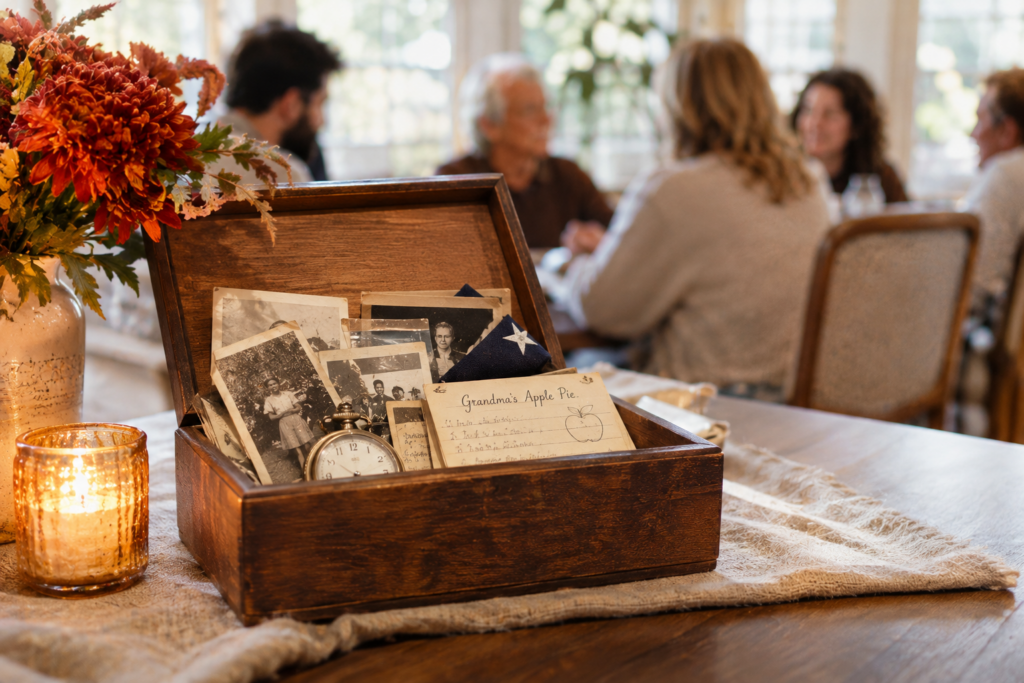
Think about the possessions that have become part of your family’s history: a grandfather’s watch, handwritten recipes, photographs, military medals, holiday decorations, or furniture that has been in the same home for decades.
These belongings may have little monetary value but enormous sentimental importance. When families eventually divide personal possessions, unclear expectations can sometimes create disagreements.
In our previous article, “What Happens to the Things That Don’t Have a Price?“, we explored why sentimental belongings deserve attention during estate planning. An ordinary object can represent decades of memories, relationships, and family history.
Thanksgiving is a natural time to reconnect with these traditions. As families bring out familiar decorations, recipes, and photographs, consider whether there are particular belongings you hope will go to specific people.
Depending on the property and your overall estate plan, specific gifts and instructions may be incorporated into appropriate estate planning documents or supporting records. You might also consider writing down the stories behind meaningful possessions so future generations understand their history.
A legacy includes more than financial assets. It also includes the memories, traditions, and personal belongings that help tell your family’s story.
More Americans Need to Start Planning
Despite the importance of family and future planning, many Americans have not taken basic steps to put their wishes in writing.
Caring.com’s 2025 Wills and Estate Planning Study found that only 24% of surveyed Americans reported having a will. Among respondents without a will, 43% said they simply had not gotten around to creating one.
The study surveyed more than 2,500 American adults and highlights a significant gap between recognizing the importance of planning and actually completing it.
One common misconception is that estate planning is only necessary for wealthy families or people approaching retirement. In reality, these decisions can matter at many stages of life.
Young parents may want to nominate guardians for minor children. Homeowners may want to understand how their property would be handled after death. Adults helping aging parents may need to understand powers of attorney and healthcare directives.
The important question isn’t simply how much money you have. It’s whether you have made the decisions that matter to you and put appropriate arrangements in place.
Five Ways to Put Gratitude Into Action This Thanksgiving
You don’t need to complete an entire estate plan over Thanksgiving weekend. However, the holiday can be a good reminder to take a few practical steps.
- Express your appreciation. Tell your loved ones why they matter. These conversations can become meaningful memories that last for years.
- Preserve family stories. Ask older relatives about family history, photographs, recipes, and meaningful possessions. Consider recording or writing down stories for future generations.
- Review your existing estate plan. If you already have a will or trust, consider whether the people you’ve named, your assets, and your beneficiary designations still reflect your wishes.
- Organize important information. Make sure you know where your estate planning documents, financial information, insurance records, and other important paperwork are located.
- Start the conversation. If you have never created an estate plan, take time to learn about the documents and decisions involved. You don’t need to have every answer before speaking with an attorney.
Small steps can create a foundation for more thoughtful planning and help make things easier for the people you care about.
Gratitude Today, Protection for Tomorrow
Thanksgiving is ultimately about appreciating what we have and recognizing the people who make our lives meaningful. But gratitude can also be an opportunity to think about the future.
The people sitting around your Thanksgiving table may one day be responsible for handling your affairs, making difficult decisions, or carrying on the traditions you helped create.
An estate plan cannot eliminate every challenge, but it can communicate your wishes, provide direction, and help establish a clearer path forward.
At Shoup Legal, we believe estate planning is about more than documents and financial assets. It’s about understanding what matters to you, protecting the people you care about, and making thoughtful decisions that reflect the life you’ve built.
We help California families create and review estate plans based on their individual circumstances and goals. We also offer free educational estate planning workshops covering trusts, wills, probate, powers of attorney, Advance Health Care Directives, and other important planning topics.
This Thanksgiving, take a moment to appreciate the people around your table. And consider what you can do today to make tomorrow a little easier for them.
Visit EstatePlanningWorkshop.org to find an upcoming workshop and register for free.
This article is intended for general educational purposes and does not provide individualized legal advice or create an attorney-client relationship.
Preguntas frecuentes
Why is estate planning considered an act of care for your family?
Estate planning allows you to communicate your wishes, identify trusted decision-makers, and establish instructions for handling your finances, healthcare decisions, and property. Having appropriate documents in place can help reduce uncertainty for loved ones.
Can an estate plan include sentimental belongings and family heirlooms?
Yes. Estate planning can address personal belongings such as jewelry, photographs, artwork, furniture, and collections. Depending on the circumstances, specific gifts can be incorporated into appropriate estate planning arrangements.
Do I need an estate plan if I don’t have significant wealth?
Yes, estate planning can benefit adults at many income levels. It can address healthcare decisions, financial authority during incapacity, guardianship nominations for minor children, and the distribution of personal belongings.
What if I already have a will or living trust?
An existing plan should be reviewed periodically to make sure it still reflects your wishes. Marriage, divorce, births, deaths, property purchases, and financial changes may all be reasons to revisit your documents.
How can I get started with estate planning?
Start by identifying your priorities, gathering existing documents, and learning about the different planning tools available. Attending a free educational estate planning workshop is another way to understand the process and your options.